Notre‑Dame Origins: Gothic Foundations, Vaults, Buttresses
A detailed chronicle of Notre‑Dame’s early construction, Gothic innovations, and foundational logic on the Île de la Cité.
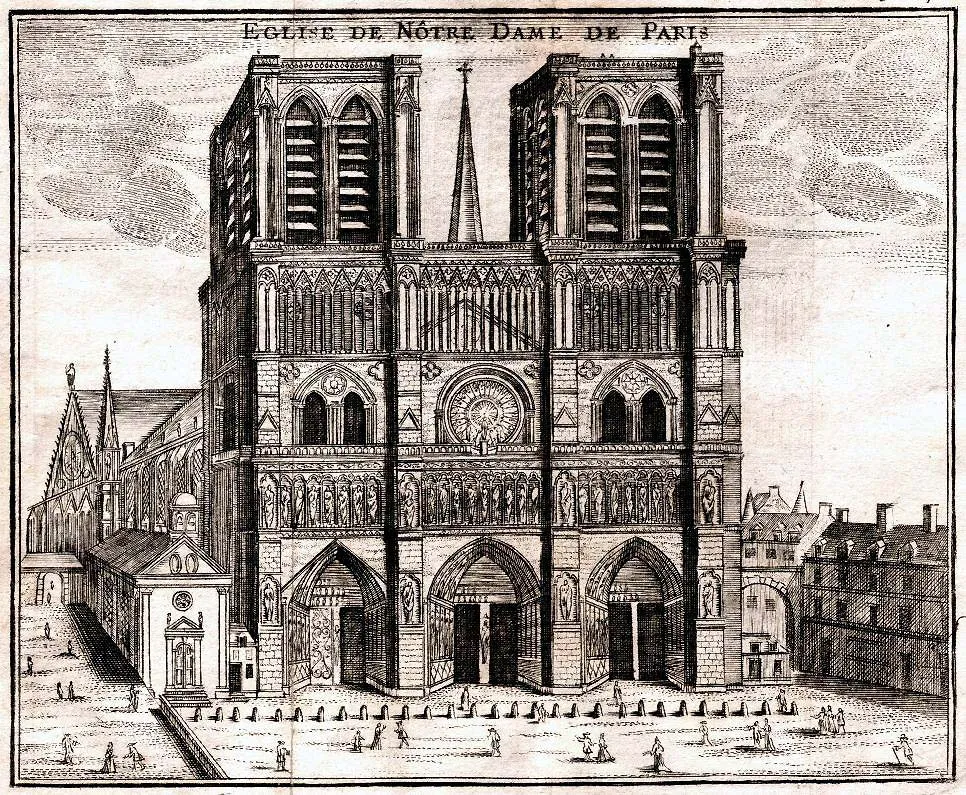
Notre‑Dame de Paris rose from the Île de la Cité with Gothic ambition and a structural intelligence that redefined sacred space. Its builders crafted foundations, rib vaults, and flying buttresses into a resilient system that balanced light and load.
🧱 Foundations on the Île
- Soil reconnaissance: Medieval masters read the alluvial strata of the Seine.
- Continuous footings: Stone courses spread loads from piers and walls.
- Moisture control: Subgrade drainage limited freeze–thaw damage.
Foundations are the silent treaty between ambition and ground.
🕸️ Rib Vaults and Load Paths
- Ribs as frames: Intersecting ogival ribs concentrate thrusts at responds.
- Webs as membranes: Thin masonry webs transfer distributed loads.
- Clerestory restraint: Upper walls are held in check by buttress chains.
$$ ext{Vault thrust} propto rac{W,h}{r} quad ext{(qualitative)} $$
🪨 Flying Buttresses: External Strength
- Arches as tendons: Buttress arches catch lateral thrust from ribs.
- Piers as anchors: Massive exterior piers sink loads to the ground.
- Spurs & pinnacles: Added mass stabilizes buckling and creep.
📊 Quick Tech Snapshot
| Element | Function | Effect |
|---|---|---|
| Rib vaults | Thrust management | Concentrate loads at supports |
| Flying buttress | Lateral restraint | Stabilize clerestory walls |
| Continuous footing | Settlement control | Spread loads to subsoil |
📸 Early Vision
Notre‑Dame’s genius lies in distributed intelligence: every rib, pier, and buttress contributes to lightness without fragility.
🗓️ Historical Timeline
- c. 1163: Cornerstone laid; choir begun.
- 1170s–1180s: Nave bays rise; first vaults tested.
- Late 12th c.: Flying buttresses introduced in phases.
- 13th c.: Rose windows and clerestory perfected.
🔬 Technical Deep Dive
YAML schema:
foundation:
  type: continuous_footing
  soil: alluvial_sands_and_clays
  mitigation:
    - drainage_channels
    - lime_grout_injections
vault:
  ribs: ogival
  webs: thin_masonry
  thrust_management: external_buttresses
$$ ext{Lateral thrust} approx W,sin heta quad ext{with } heta ext{ as vault pitch} $$
❓ FAQ
- Why are buttresses outside? To keep the nave walls thin and luminous.
- Do foundations flood? Historic drainage routes and paving gradients mitigate risk.
📚 Glossary
- Respond: A half‑pier where ribs land.
- Clerestory: Upper wall zone admitting light.
[^survey]: Modern laser surveys validate medieval alignments and settlement behavior.
About the Author

Architecture Historian
As a Paris lover and careful traveler, I created this guide to help visitors connect with Notre‑Dame’s stories — where faith, craft, and community meet.
Tags
Comments (0)
Loading comments...